

Customer Communications Governance vs CCM: Where Do Financial Promotions Fit?
Governance, CCM and financial promotion approval answer different questions. What each one checks, where they overlap, and what to ask of your setup.

Where Does the Data Go? 7 Questions to Ask Your AI Vendor
Using AI with customer data? Ask your AI vendor these seven questions about data location, retention, sub-processors and UK GDPR.
COBS 3A: What Your Client Categorisation Letters Need to Explain
COBS 3A changes how firms discuss professional status, warn clients and capture consent. What to review in your letters, consent journeys and client records.

The payment left on Monday. Where is it now? What the customer is told when an international transfer stalls
Why international payment updates can be unclear, what UK rules say about certain refusal notices, and how teams can manage the wording customers receive.

"We need a few more documents": what the customer is told during a KYC check
UK KYC and AML communications: how document requests and account-closure notices differ, and where tipping-off and approval questions arise.

Paying from the UK to Mexico: when the receiving bank asks for payer details
A Mexican bank may request more information about a UK payer. How to communicate a confirmed payment hold clearly and securely.

"Please send the invoice": when a provider holds a trade payment and asks for documents
Why a payment provider may request an invoice during a review, and how a clear document request can help customers respond.

The file moves. Does the flag? What CONC 7.13 says should travel with a debt
When a debt passes to a collector, do the dispute and vulnerability flags go with it? What CONC 7.13 and 7.14 say, and where the flag gets lost.
One missing paragraph: the final response that doesn’t start the six-month clock
Does a final response explain the six-month ombudsman time limit? What DISP 1.6 and DISP 2.8 say about when the clock starts, and what to check in the wording.

Dated Monday. Posted Friday. The date that starts the debtor’s 30 days
A Letter of Claim dated Monday, posted Friday. How the Pre-Action Protocol for Debt Claims counts the 30 days, and the three dates worth comparing.

The debt adviser just called: what CONC 7.3.11R suspends, and for how long
A debt adviser calls to say a repayment plan is on its way. What CONC 7.3.11R suspends, how long the pause lasts, and where it breaks.

Nothing is late. Yet. When CONC 7.3 forbearance starts before arrears
A customer who has never missed a payment says next month will be hard. Why CONC 7.3 already applies, and where the early signal gets missed.

Same letter, two legal systems: old debts in England and Scotland
The same arrears template, sent to Leeds and Glasgow. Why an old debt is treated differently in England and Scotland, and what CONC 7.8 and 7.15 say.

Breathing Space has two clocks: what stops in your letter sequence
A Breathing Space notice arrives with a reminder due tomorrow. What creditors must stop, which letters may still go, and why the two types end differently.

Who else reads the envelope?
What CONC 7.9 says about third parties learning of a debt. Practical checks for the sender name, envelope and the records that show what was sent.

Which parts of a customer letter should AI be allowed to rewrite?
AI can make complaint letters clearer. Decide which wording it may rewrite, which facts must retain their meaning, and which text needs protection.

The template owner leaves. Who takes over?
When a letter template owner leaves, use this handover checklist to assign the next editor, flag unfinished drafts and pass on review dates.

One renewal, three answers: which one should the customer rely on?
When the renewal email, PDF and customer portal disagree, how can an insurance team verify the premium, cover and effective date before the next renewal run?

Pensions dashboards and member letters: which date does the figure refer to?
When dashboard and pension statement figures differ, clear labels matter. Practical checks for dates, value types and approved wording in member letters.

FCA information request deadlines: how to assemble the letter evidence pack
Responding to an FCA information request? Check which deadline applies and assemble a letter evidence pack linking approvals, generation, output and sending.

ECB vulnerability standards from January 2027: what should enforcement firms check in their letters?
Enforcement Conduct Board (ECB) vulnerability standards start in January 2027. Seven practical checks for enforcement letters, contact routes and records.

The customer is holding the letter. Can your agent see it?
When a customer calls about a letter, can your agent see the same document? A practical check of contact-centre access, guidance and communication records.

Forbearance letter wording: can the customer understand the support offered?
Review forbearance letters against the support offered. Check payment terms, balance and credit-file explanations, and keep creditor and agency wording aligned.

One sentence, 36 places: why small wording changes take so long
One wording change can affect dozens of separately maintained versions. Count where a sentence lives, review each format and coordinate its release.
Regulation F validation notices: did you test the generated output?
Test generated Regulation F validation notices for long names, itemization fields and page breaks. Connect the reviewed output to the approved template version.

You reviewed the change. Did anyone read the whole letter?
A tracked change can be right on its own and still contradict the rest of the letter. Five signals that call for a full read, and what to record.
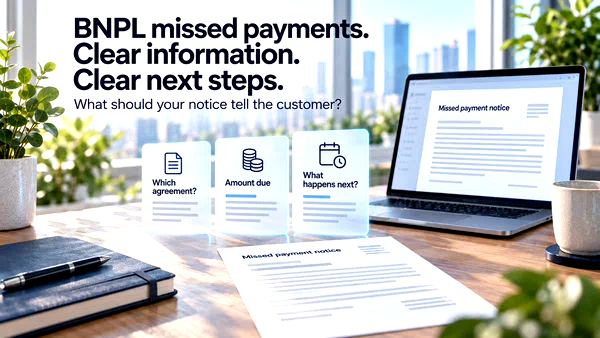
BNPL missed-payment notice: what CONC 7.20 requires
What FCA rule CONC 7.20.1R requires a missed-payment notice on regulated deferred payment credit to tell the customer, and how to check yours.
BNPL collections handover: what notice evidence should travel with the account?
What notice evidence should travel with a BNPL account? A practical checklist covering approved versions, generation records, retained outputs and sending results.
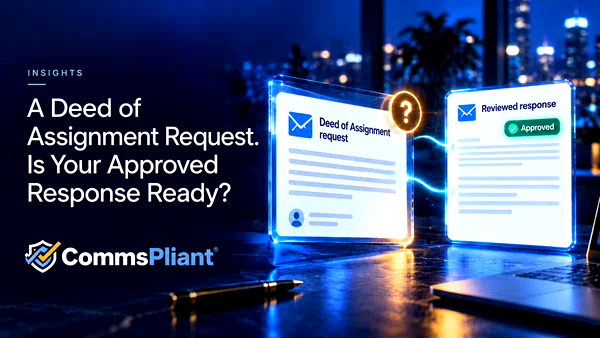
When a Customer Demands a Deed of Assignment: Is Your Approved Response Ready?
CSA guidance on Deed of Assignment myths, genuine subject access requests and keeping collections responses appropriate, approved and traceable.

AI writes the wording. Who approves it?
AI can improve customer wording. Learn how human approvals, template versions and generation evidence help teams control what is used.
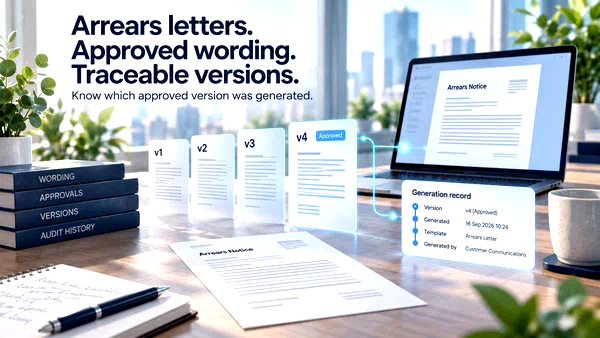
CONC 7 arrears communications: what rules apply, and which approved version was generated?
What CCA s86B–86C arrears notices and FCA CONC 7 require in arrears letters, plus a practical checklist for proving which letter version was generated.
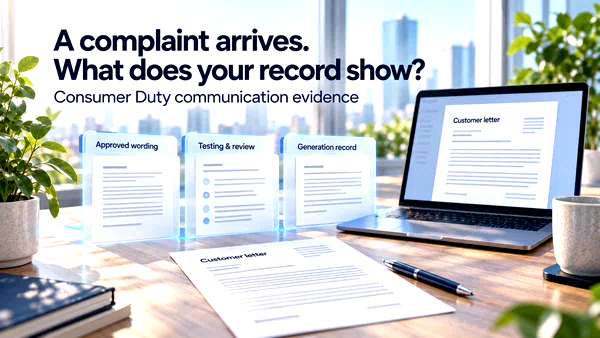
Consumer Duty communications evidence: what should your record show when a complaint arrives?
What the Consumer Duty and DISP expect when a complaint questions an arrears letter, what the FCA found in March 2026, and what your record should show.

One Customer Email, Three Teams, One Approval Workflow
See how three teams can review and approve one customer email during a broadband outage, with version history and a connected CommsPliant evidence record.
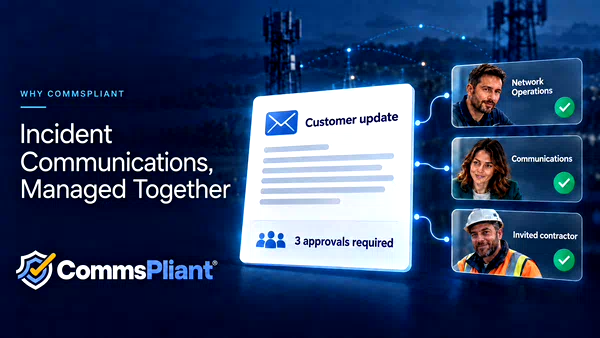
Incident Communications, Managed Together
Bring internal teams and external partners together to review and approve incident communications, with version history and the CommsPliant Evidence Vault.
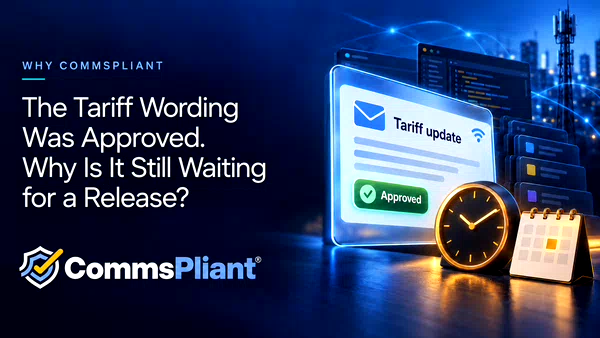
The Tariff Wording Was Approved. Why Is It Still Waiting for a Release?
Update tariff email wording through version control and human approval in CommsPliant, without a software release for supported template changes.
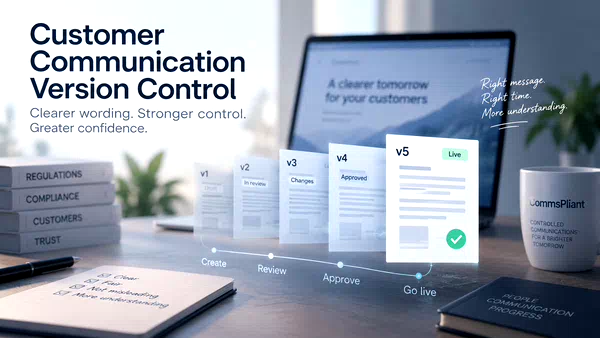
Customer Communication Version Control: What It Is and Why It Matters
Learn how version control works for regulated customer communications, from wording changes and approvals to generation records and audit evidence.
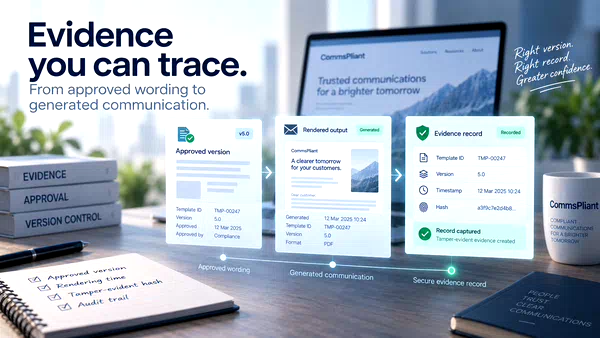
How to Evidence a Generated Customer Communication
Learn what evidence can connect a generated customer communication to its approved template version, rendering event and audit history.
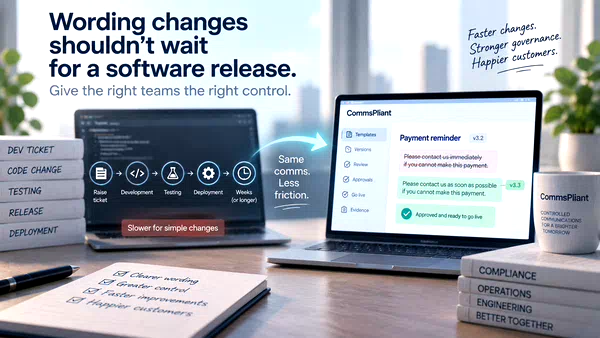
When a Wording Change Should Not Wait for a Software Release
Why customer wording changes should not always need a developer ticket and deployment, and when engineering still needs to be involved.
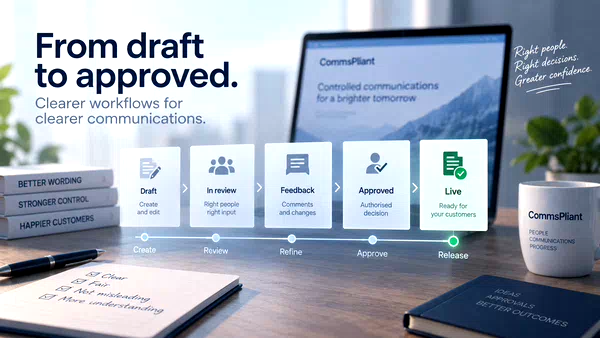
What an Approved Wording Workflow Needs to Record
Learn what a controlled customer communication approval workflow should record, from exact version and change history to review, approval and release.

When the Real Compliance Problem Is Proving Who Changed What
When approvals are questioned later, can you prove who changed, reviewed and approved the exact version? Explore the communication evidence problem.

Compliance approved the wording in a day. Going live took five.
Compliance approved the wording on day one. Why did release take five? See where the delay happens and how CommsPliant cuts the release bottleneck.

Revolut’s Data Breach and the Risk of Trusting an Official Email
Revolut’s reported data breach highlights the need for requester verification, controlled disclosures and audit evidence when handling customer information.

When AI Sounds Regulated: The FCA’s Warning on Investor Trust
FCA research reveals misconceptions about AI financial information. What should firms check when AI helps shape customer communications?

When Systems Fail, Who Approves the Customer Update?
The FCA’s resilience exercise raises a practical question: can your team prepare, approve and track customer updates when disruption affects several firms?

£4.7 Million: When Regulatory Change Outruns Operational Controls
Explore Citibank’s £4.7m sanctions penalty, OFSI’s findings and the practical lessons for regulatory change, operational controls and communication governance.

Which Version Did the Customer See?
When approved wording reaches email, portal and PDF at different times, customers can see different versions. See how CommsPliant helps keep them aligned.
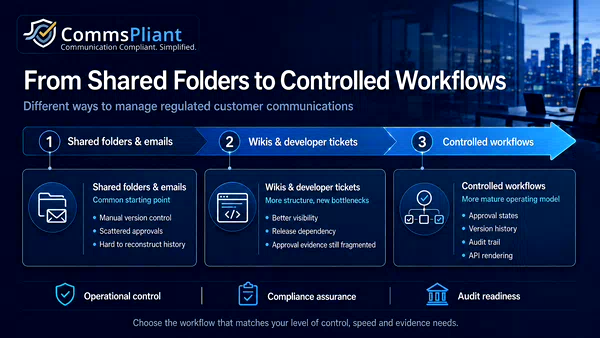
Different Ways to Manage Regulated Customer Communications: From Shared Folders to Controlled Workflows
Shared folders, wikis, developer tickets or a controlled workflow: compare four ways regulated teams manage customer emails, PDFs and letters.
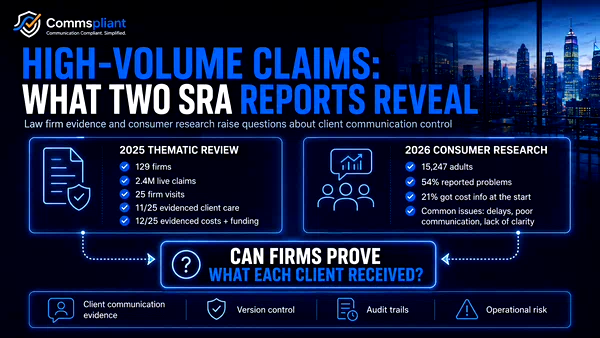
High-Volume Consumer Claims: What Two SRA Reports Reveal About Client Communication Evidence
A practical overview of two SRA reports on high-volume consumer claims, what they found about law firm practices and consumer experiences, and why firms need reliable evidence of what each client received.

When Council Letters Become Harder Than They Need to Be
Small councils often manage recurring letters across spreadsheets, CSV files and manual processes. See how CommsPliant can simplify control, approval and evidence.

When a Customer Complaint Becomes an Audit of Your Communication Controls
A customer complaint can expose gaps in versioning, approvals and audit evidence. Explore what regulated teams need to reconstruct what was sent.