
Customer Communications Governance vs CCM: Where Do Financial Promotions Fit?
Governance, CCM and financial promotion approval answer different questions. What each one checks, where they overlap, and what to ask of your setup.

COBS 3A: What Your Client Categorisation Letters Need to Explain
COBS 3A changes how firms discuss professional status, warn clients and capture consent. What to review in your letters, consent journeys and client records.

"We need a few more documents": what the customer is told during a KYC check
UK KYC and AML communications: how document requests and account-closure notices differ, and where tipping-off and approval questions arise.

Which parts of a customer letter should AI be allowed to rewrite?
AI can make complaint letters clearer. Decide which wording it may rewrite, which facts must retain their meaning, and which text needs protection.

FCA information request deadlines: how to assemble the letter evidence pack
Responding to an FCA information request? Check which deadline applies and assemble a letter evidence pack linking approvals, generation, output and sending.

Forbearance letter wording: can the customer understand the support offered?
Review forbearance letters against the support offered. Check payment terms, balance and credit-file explanations, and keep creditor and agency wording aligned.

One sentence, 36 places: why small wording changes take so long
One wording change can affect dozens of separately maintained versions. Count where a sentence lives, review each format and coordinate its release.
Regulation F validation notices: did you test the generated output?
Test generated Regulation F validation notices for long names, itemization fields and page breaks. Connect the reviewed output to the approved template version.

You reviewed the change. Did anyone read the whole letter?
A tracked change can be right on its own and still contradict the rest of the letter. Five signals that call for a full read, and what to record.
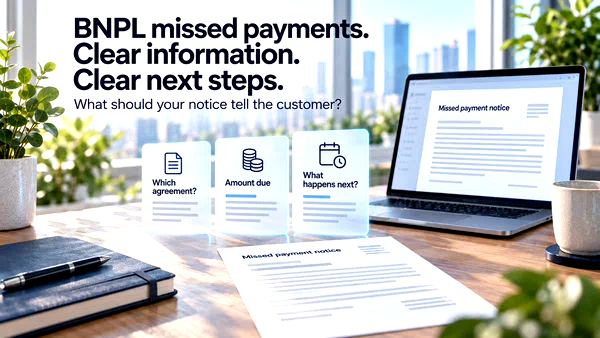
BNPL missed-payment notice: what CONC 7.20 requires
What FCA rule CONC 7.20.1R requires a missed-payment notice on regulated deferred payment credit to tell the customer, and how to check yours.
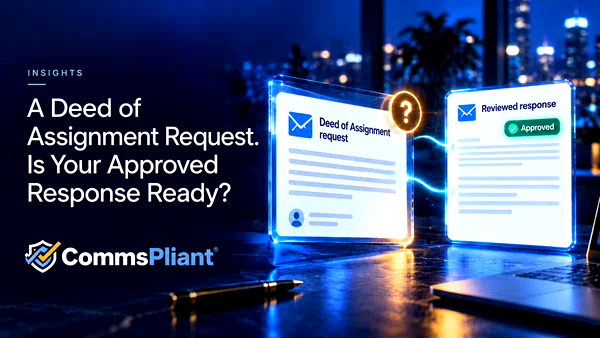
When a Customer Demands a Deed of Assignment: Is Your Approved Response Ready?
CSA guidance on Deed of Assignment myths, genuine subject access requests and keeping collections responses appropriate, approved and traceable.

AI writes the wording. Who approves it?
AI can improve customer wording. Learn how human approvals, template versions and generation evidence help teams control what is used.
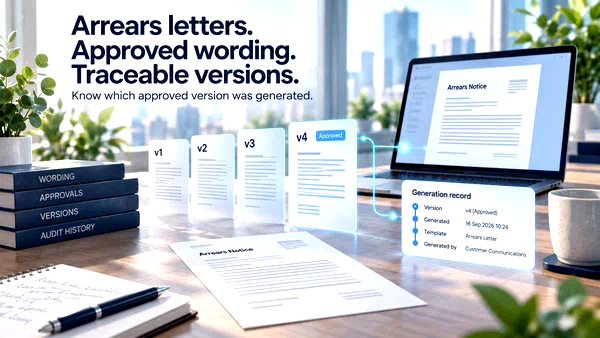
CONC 7 arrears communications: what rules apply, and which approved version was generated?
What CCA s86B–86C arrears notices and FCA CONC 7 require in arrears letters, plus a practical checklist for proving which letter version was generated.

One Customer Email, Three Teams, One Approval Workflow
See how three teams can review and approve one customer email during a broadband outage, with version history and a connected CommsPliant evidence record.
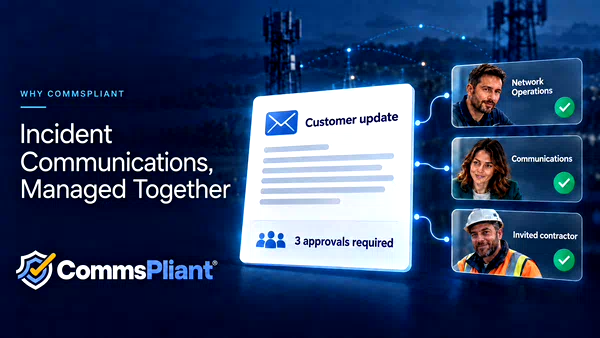
Incident Communications, Managed Together
Bring internal teams and external partners together to review and approve incident communications, with version history and the CommsPliant Evidence Vault.
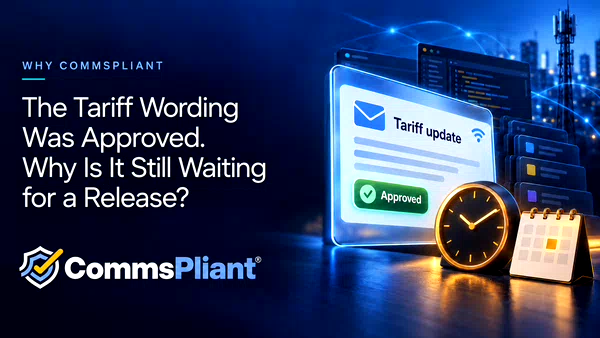
The Tariff Wording Was Approved. Why Is It Still Waiting for a Release?
Update tariff email wording through version control and human approval in CommsPliant, without a software release for supported template changes.
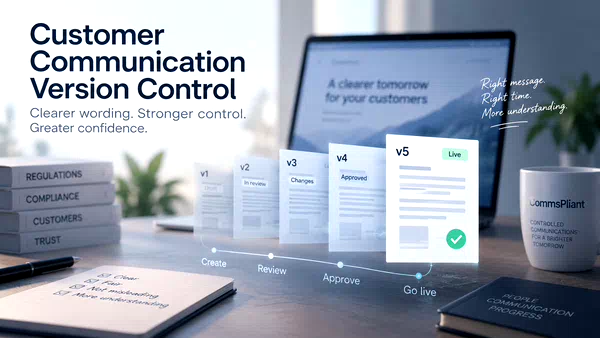
Customer Communication Version Control: What It Is and Why It Matters
Learn how version control works for regulated customer communications, from wording changes and approvals to generation records and audit evidence.
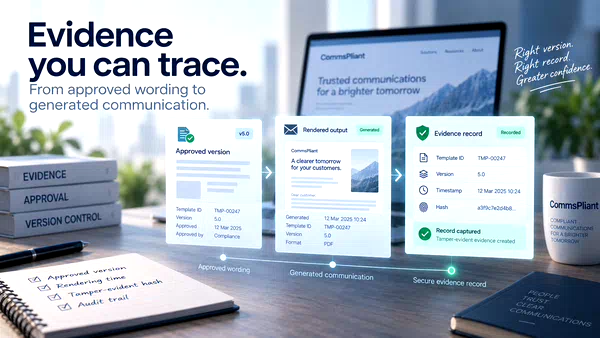
How to Evidence a Generated Customer Communication
Learn what evidence can connect a generated customer communication to its approved template version, rendering event and audit history.
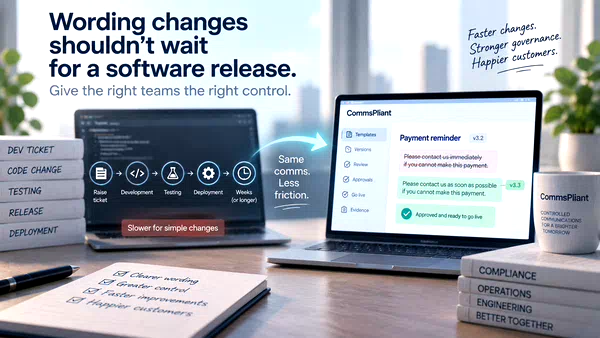
When a Wording Change Should Not Wait for a Software Release
Why customer wording changes should not always need a developer ticket and deployment, and when engineering still needs to be involved.
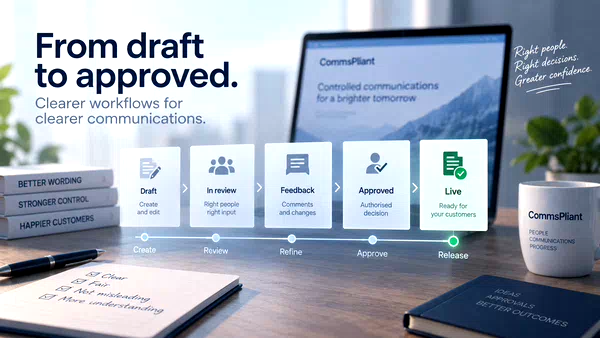
What an Approved Wording Workflow Needs to Record
Learn what a controlled customer communication approval workflow should record, from exact version and change history to review, approval and release.

When the Real Compliance Problem Is Proving Who Changed What
When approvals are questioned later, can you prove who changed, reviewed and approved the exact version? Explore the communication evidence problem.

Compliance approved the wording in a day. Going live took five.
Compliance approved the wording on day one. Why did release take five? See where the delay happens and how CommsPliant cuts the release bottleneck.
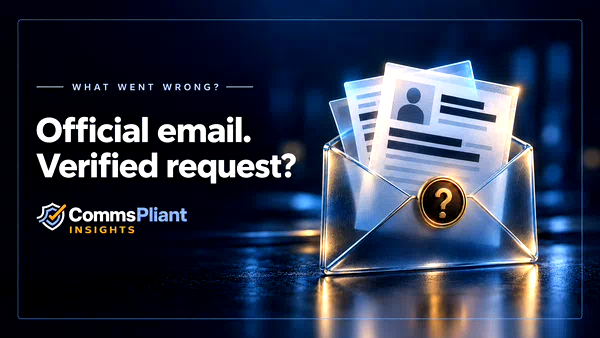
Revolut’s Data Breach and the Risk of Trusting an Official Email
Revolut’s reported data breach highlights the need for requester verification, controlled disclosures and audit evidence when handling customer information.

When AI Sounds Regulated: The FCA’s Warning on Investor Trust
FCA research reveals misconceptions about AI financial information. What should firms check when AI helps shape customer communications?

When Systems Fail, Who Approves the Customer Update?
The FCA’s resilience exercise raises a practical question: can your team prepare, approve and track customer updates when disruption affects several firms?

£4.7 Million: When Regulatory Change Outruns Operational Controls
Explore Citibank’s £4.7m sanctions penalty, OFSI’s findings and the practical lessons for regulatory change, operational controls and communication governance.

One Name on the Approval Log
One name on an approval log doesn't prove independent review. Learn why segregation of duties matters and how to enforce it as a workflow rule.
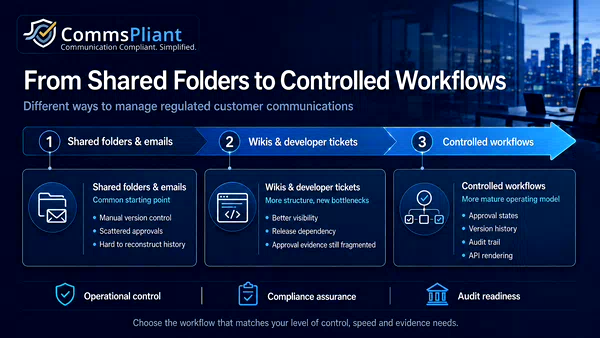
Different Ways to Manage Regulated Customer Communications: From Shared Folders to Controlled Workflows
Shared folders, wikis, developer tickets or a controlled workflow: compare four ways regulated teams manage customer emails, PDFs and letters.
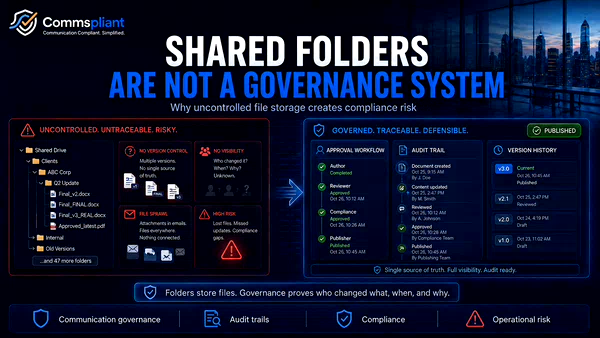
Shared Folders Are Not a Communication Governance System
Learn why shared folders are not enough for managing approved customer emails, PDFs and letters, and how they can create version confusion, approval gaps and audit trail problems.
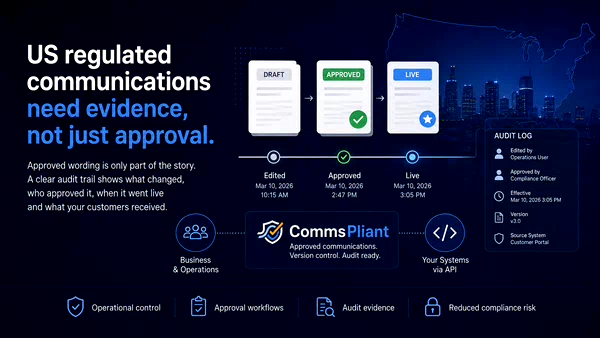
Why US Regulated Communications Need More Than Approved Wording
Customer emails, PDFs and disclosures in US regulated businesses need more than approved wording. Learn why approval history, version control and audit evidence matter.