

The file moves. Does the flag? What CONC 7.13 says should travel with a debt
When a debt passes to a collector, do the dispute and vulnerability flags go with it? What CONC 7.13 and 7.14 say, and where the flag gets lost.
One missing paragraph: the final response that doesn’t start the six-month clock
Does a final response explain the six-month ombudsman time limit? What DISP 1.6 and DISP 2.8 say about when the clock starts, and what to check in the wording.

Dated Monday. Posted Friday. The date that starts the debtor’s 30 days
A Letter of Claim dated Monday, posted Friday. How the Pre-Action Protocol for Debt Claims counts the 30 days, and the three dates worth comparing.

The debt adviser just called: what CONC 7.3.11R suspends, and for how long
A debt adviser calls to say a repayment plan is on its way. What CONC 7.3.11R suspends, how long the pause lasts, and where it breaks.

Nothing is late. Yet. When CONC 7.3 forbearance starts before arrears
A customer who has never missed a payment says next month will be hard. Why CONC 7.3 already applies, and where the early signal gets missed.

Same letter, two legal systems: old debts in England and Scotland
The same arrears template, sent to Leeds and Glasgow. Why an old debt is treated differently in England and Scotland, and what CONC 7.8 and 7.15 say.

Breathing Space has two clocks: what stops in your letter sequence
A Breathing Space notice arrives with a reminder due tomorrow. What creditors must stop, which letters may still go, and why the two types end differently.

Who else reads the envelope?
What CONC 7.9 says about third parties learning of a debt. Practical checks for the sender name, envelope and the records that show what was sent.

Which parts of a customer letter should AI be allowed to rewrite?
AI can make complaint letters clearer. Decide which wording it may rewrite, which facts must retain their meaning, and which text needs protection.

One renewal, three answers: which one should the customer rely on?
When the renewal email, PDF and customer portal disagree, how can an insurance team verify the premium, cover and effective date before the next renewal run?

Pensions dashboards and member letters: which date does the figure refer to?
When dashboard and pension statement figures differ, clear labels matter. Practical checks for dates, value types and approved wording in member letters.

Forbearance letter wording: can the customer understand the support offered?
Review forbearance letters against the support offered. Check payment terms, balance and credit-file explanations, and keep creditor and agency wording aligned.
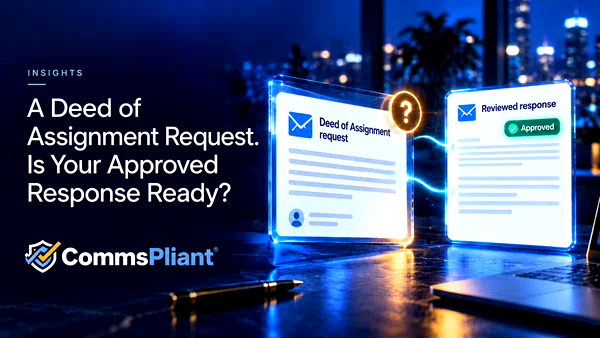
When a Customer Demands a Deed of Assignment: Is Your Approved Response Ready?
CSA guidance on Deed of Assignment myths, genuine subject access requests and keeping collections responses appropriate, approved and traceable.

When Systems Fail, Who Approves the Customer Update?
The FCA’s resilience exercise raises a practical question: can your team prepare, approve and track customer updates when disruption affects several firms?

Senior FCA Official Urges Financial Firms to Use ECCTA Information-Sharing Powers
A senior FCA official is urging financial firms to use ECCTA information-sharing powers as government guidance highlights audit trails and decision records.

Off-the-Shelf Controls Aren't Enough: The Operational Lesson Behind the FCA's Annex 1 Warning
The FCA is increasing scrutiny of Annex 1 firms. We look at the operational lesson for regulated communications, governance and audit-ready evidence.
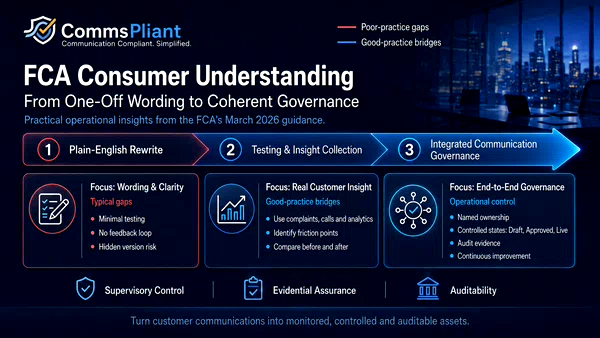
FCA Consumer Understanding: A Human Summary for Regulated Firms
A plain-English summary of the FCA’s March 2026 consumer understanding publication, with practical takeaways for regulated firms reviewing customer communications, testing, monitoring and governance.